The idea of changing your training routine very frequently is one of the most widespread beliefs in the gym, but also one of the least understood. It is often thought that the muscle “gets used” quickly to a specific stimulus and, therefore, it is necessary to constantly change exercises to continue progressing. This interpretation is incorrect or, at the very least, incomplete.
The muscle does not “get tired” of a routine in a few weeks. What really happens is that the body adapts to the stimulus, and that adaptation is precisely the goal of training. If you change the routine too soon, you can interrupt that adaptation process before it produces clear results.
What a training routine really means
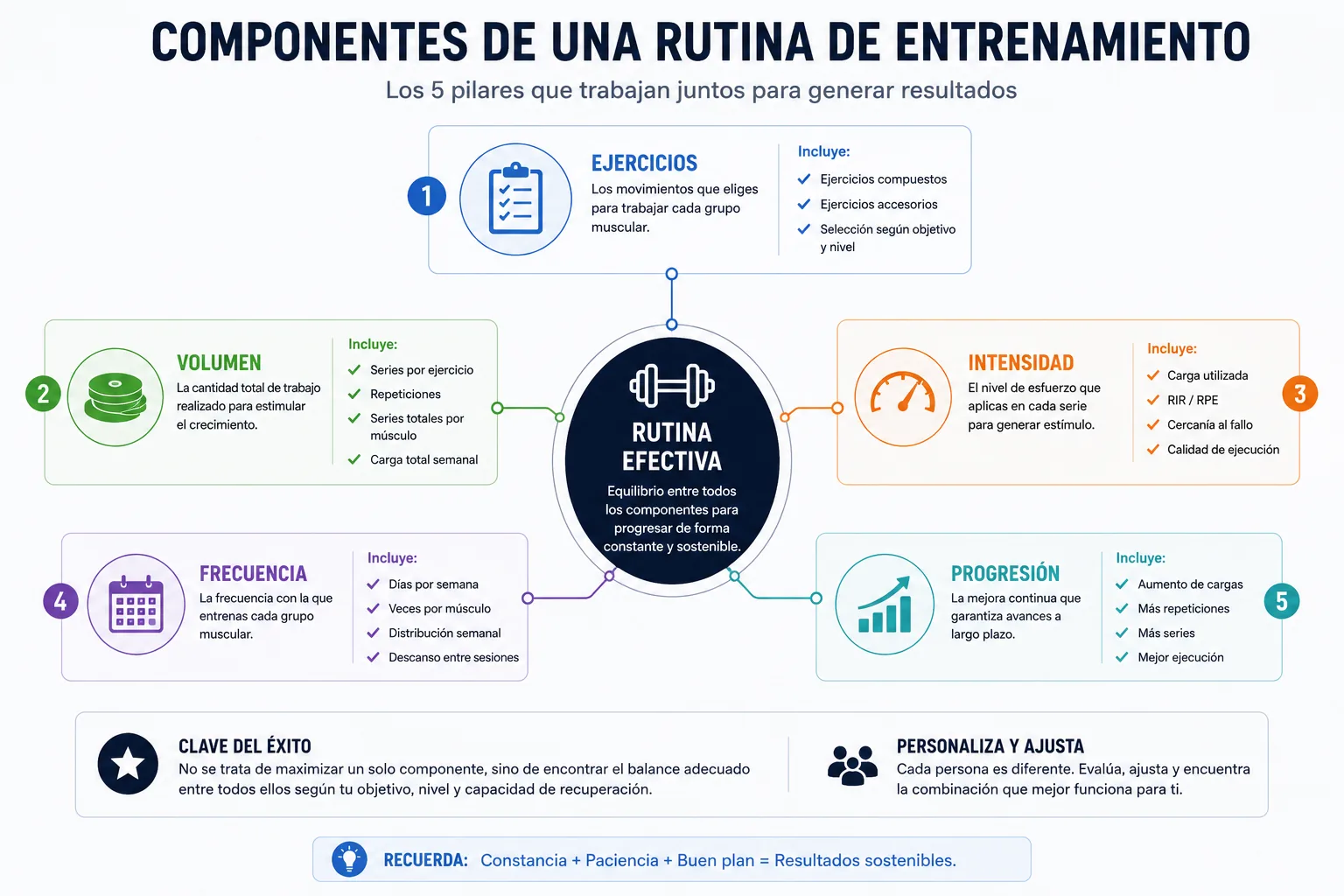
A routine is not simply a list of exercises. It is a structured system that defines:
- What muscles are trained
- How many times per week are they stimulated?
- With what volume (total series)
- With what intensity (load and proximity to failure)
- With what progression over time
Therefore, changing the routine is not just changing exercises, but modifying the overall stimulus.
And here's the key point: if the stimulus is well designed, you don't need to change it every few weeks.
The most important principle: adaptation takes time
The human body works by progressive adaptation. This means that:
- A stimulus causes a response
- That response is optimized with repetition
- Over time, the body becomes more efficient
This process is the basis of hypertrophy, which does not occur due to constant changes, but rather due to repeated exposure to the same type of stimulus with progression.
If you change your routine every few weeks:
- You do not repeat the stimulus enough
- You do not accumulate measurable adaptations
- You can't evaluate real progress
Phases of adaptation to a routine
When you follow a routine consistently, the body goes through several phases:
1. Learning phase (0–2 weeks)
- You learn the exercises
- Improves coordination
- The nervous system adapts
- Progress is mainly technical
2. Adaptation phase (2–6 weeks)
- Clear performance improvement
- Initial strength increase
- The body begins to respond to repeated stimulation
3. Actual progress phase (6–12 weeks)
- Measurable changes are observed in strength and physique
- Increase in tolerated training volume
- Visible improvement in body composition
4. Stabilization phase (12+ weeks)
- Progress slows down
- It is necessary to adjust variables (not change everything)
Why changing your routine too soon slows progress
One of the most common mistakes is changing your routine every 2–4 weeks. This creates several problems:
1. Not enough adaptation time
The body needs to repeat the same stimulus several times to optimize it.
2. You can't measure real progress
If every few weeks you change exercises or structure:
- You don't know if you are progressing in strength
- You don't know if the volume works
- You can't compare data
3. Discontinuation of the principle of progressive overload
Progressive overload depends on repeating the same movement pattern:
- More weight
- More repetitions
- Better control
If you constantly change, you restart the process.
4. Unstable psychological progress
There is also a mental component:
- Lack of reference
- Constant feeling of stagnation
- Difficulty building confidence in training

How long should you maintain a routine
In most cases, a reasonable range is:
- 6 to 12 weeks minimum effective
- With small adjustments within that period
- Structural review after that cycle
This allows:
- Accumulate enough volume
- Measure real progression
- Evaluate if the stimulus works
Change vs Adjust: Key Difference
Here is the most important point:
Change routine
- New split
- New exercises
- Complete new structure
Adjust routine
- More weight
- More repetitions
- Change breaks
- Substitute 1–2 exercises
In most cases, the right thing to do is not to change, but to adjust.
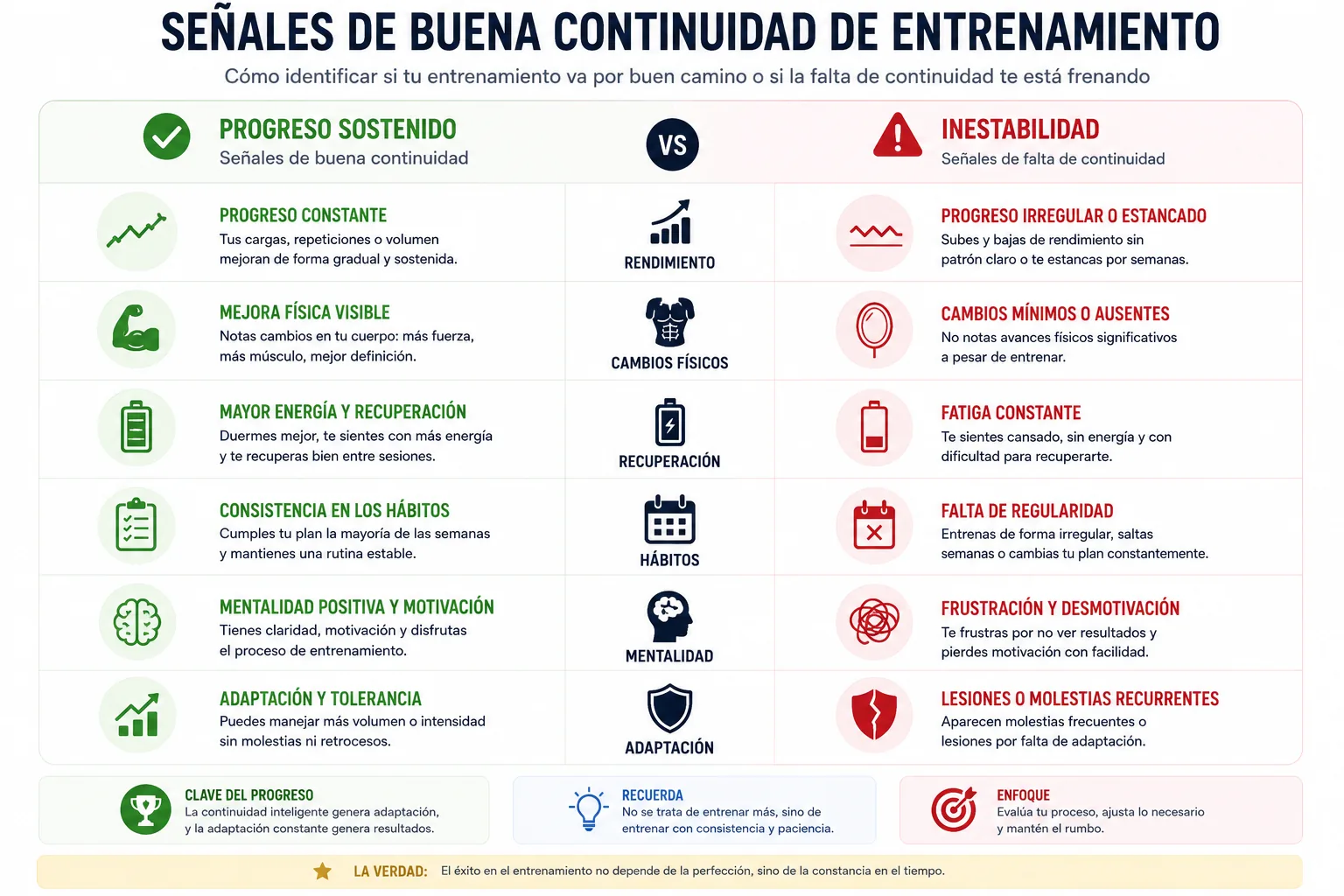
Signs that you are changing too much
- You do not progress in loads
- You can't measure evolution
- You are always “starting over”
- You never consolidated technique in exercises
- Constant feeling of stagnation
Signs that you are doing the right thing
- You progress even if slowly
- You keep the same exercises for weeks
- You can compare results week by week
- Technical and control improvements
Part 1 Final Key Idea
The biggest mistake is not doing the same routine for too long, but not giving it enough time to work.
The body does not need constant variety, it needs:
- Repeated stimulus
- Measurable progression
- Enough time to adapt
If you change too soon, you interrupt the process before the result occurs.
Should you change your routine every few weeks?
In the first part we saw that the main mistake is not repeating a routine, but changing it too soon before the body has had enough time to adapt. Now it's time for the practical part: when you should change it, how to do it without losing progress and what strategies allow you to continue advancing without having to restart the entire system.
When YES you should change your routine
Changing the routine is not mandatory due to time, but due to specific signs. The criterion is not “X weeks have passed”, but rather “the stimulus has stopped producing adaptation”.
1. Real and prolonged stagnation
If the following occurs for 4–6 weeks in a row:
- You do not increase loads in main exercises
- You do not improve repetitions with the same weight
- There are no visible changes in measurements or body composition
- Performance remains flat even with good rest
Then it is likely that the stimulus is no longer sufficient.
2. Accumulated fatigue that is not resolved
Fatigue is not just occasional tiredness. It is a chronic state when:
- You start each session without energy
- Strength gradually decreases
- Muscle pain lasts longer than normal
- Performance gets worse week after week
In this case, you don't always have to change everything, but you do have to modify structure, volume or distribution.
3. Clear muscle imbalances
If you notice that:
- Some muscles grow and others don't
- There are weak points that never improve
- The progression is uneven without explanation
So the problem is usually one of programming, not effort.
4. Lack of real adhesion
Although it sounds simple, if you can't keep up the routine:
- Due to excess complexity
- Due to lack of time
- Out of extreme boredom
So the routine is not sustainable, and therefore is not effective in the long term.

How to change the routine correctly
The mistake is not changing it, but changing it wrong. A smart change follows these rules:
1. Maintain the exercise base
You don't need to reinvent everything. In most cases:
- Maintain 60–80% of main exercises
- Change only accessories or variants
- Maintains movement patterns (push, pull, leg)
2. Change only one variable at a time
You can modify:
- Volume (total series)
- Intensity (weight or rep range)
- Frequency (days per week)
- Specific exercises
But not all at once, or you lose progress reference.
3. Adjust before replacing
Before changing your entire routine, try:
- Increase or reduce series
- Improve rest between sets
- Adjust progressive loads
- Change order of exercises
Many times the problem is not the routine, but its execution.
How long is optimal to maintain a routine
In practice:
- 6 to 12 weeks is the most efficient range for most
- Less than 4 weeks is usually too little
- More than 12 weeks may require adjustments, but not necessarily complete change
The important thing is not the exact time, but the evolution of performance.
How to progress without changing your routine
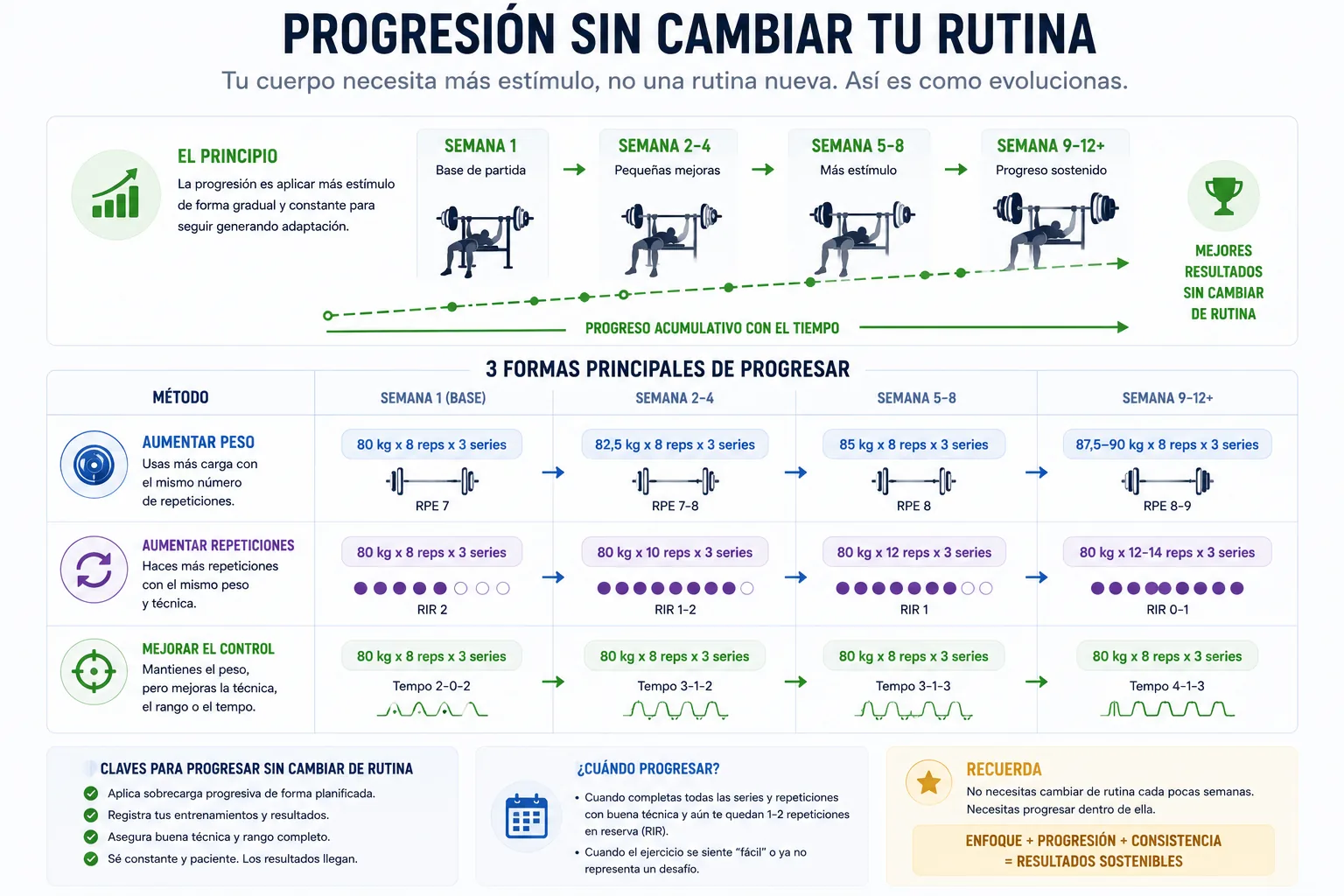
Most progress should come without changing the base structure. You can progress by:
1. Progressive overload
- More weight maintaining repetitions
- More repetitions with the same weight
- More effective series
2. Technical improvement
- Greater range of motion
- Better eccentric control
- Less boost usage
3. Optimization of effort
- Train closer to failure (without losing technique)
- Strategically reduce breaks
- Improve the quality of each repetition
The biggest mistake: changing routine out of boredom
Many people change their routine not because of physiological necessity, but because:
- Boredom
- Lack of patience
- Social media influence
- Desire to “feel something new”
The problem is that progress does not depend on novelty, but on repetition of the stimulus.
Definitive rule of thumb
If you want a simple guide:
- If you progress → DO NOT change the routine
- If you are stuck → adjust variables
- If everything fails for weeks → structure changes
This prevents both stagnation and excess change.

It should show a simple decision diagram based on progress, stagnation and recovery.
Conclusion
Changing your routine every few weeks is not only unnecessary, it can limit progress if done without judgment. The body needs time to adapt to a stimulus and produce real changes.
The key is not to constantly change, but to:
- Maintain a stable foundation
- Adjust intelligently when necessary
- Measure progress objectively
Growth does not come from constant variety, but from consistency applied with progression.