When it comes to fat loss, running and walking are often compared as if they were rivals. Actually, they are not. They are tools with different characteristics that can produce similar or even better results depending on how they are used.
The key is to understand that fat loss does not depend on a single workout, but on weekly energy balance and the ability to maintain consistent habits for a long time.
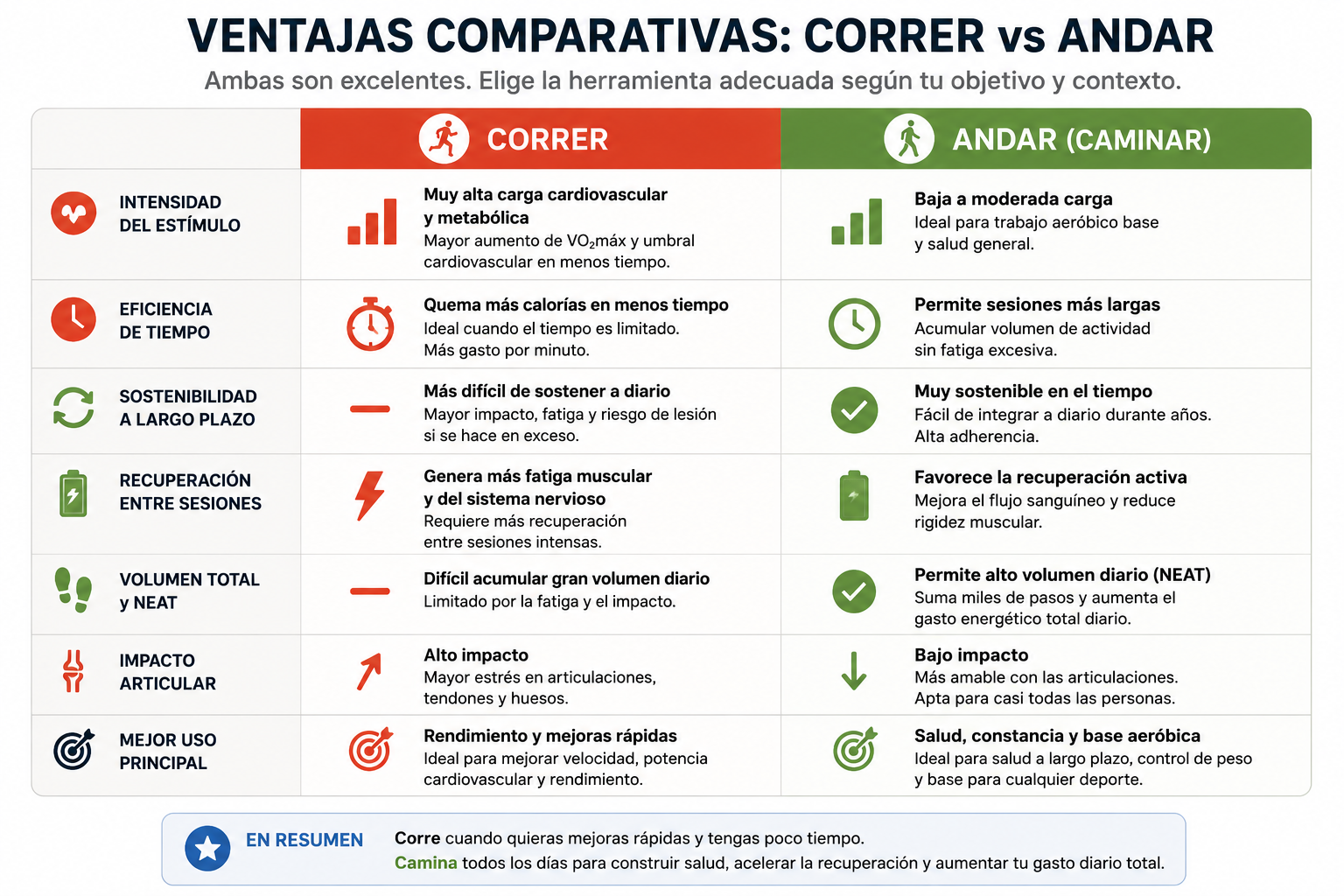
Physiological difference between running and walking
Running is a higher intensity activity. This implies:
- Higher heart rate
- Higher energy demand per minute
- Greater global muscle activation
- Increased glycogen consumption
Walking is a low intensity activity:
- Lower heart rate
- Less fatigue
- Longest possible duration
- Less joint impact
This already gives us an important first clue: running is more “powerful” per minute, but walking is more sustainable.

Calories per minute vs total calories
One of the most common mistakes is to focus only on caloric expenditure per minute.
Conceptual example:
- Running: high expenditure/minute, but difficult to maintain for a long time
- Walking: less expense per minute, but you can do it for hours
If you multiply the time, walking can equal or even exceed the total weekly expenditure of running for many people.
Energy use during exercise
During exercise:
- Walking: the body uses a greater proportion of fat as relative fuel
- Running: the body uses more carbohydrates during activity
But this does not directly determine the final fat loss.
What matters is the total daily and weekly calorie deficit.

The most important variable: how long you can hold it
This is where the real difference appears.
Walk:
- It can be done every day
- Does not generate significant fatigue
- No recovery required
- Compatible with other activities
Run:
- Generates more muscle fatigue
- May require rest
- More joint impact
- Sustainable lower frequency for many people
This makes walking have a key advantage: weekly volume.
Cumulative effect of daily movement
Fat loss doesn't just depend on the “workout,” but on the total movement of the day.
This includes:
- daily steps
- Work activity
- General Movement (NEAT)
Walking greatly increases NEAT without generating additional stress.

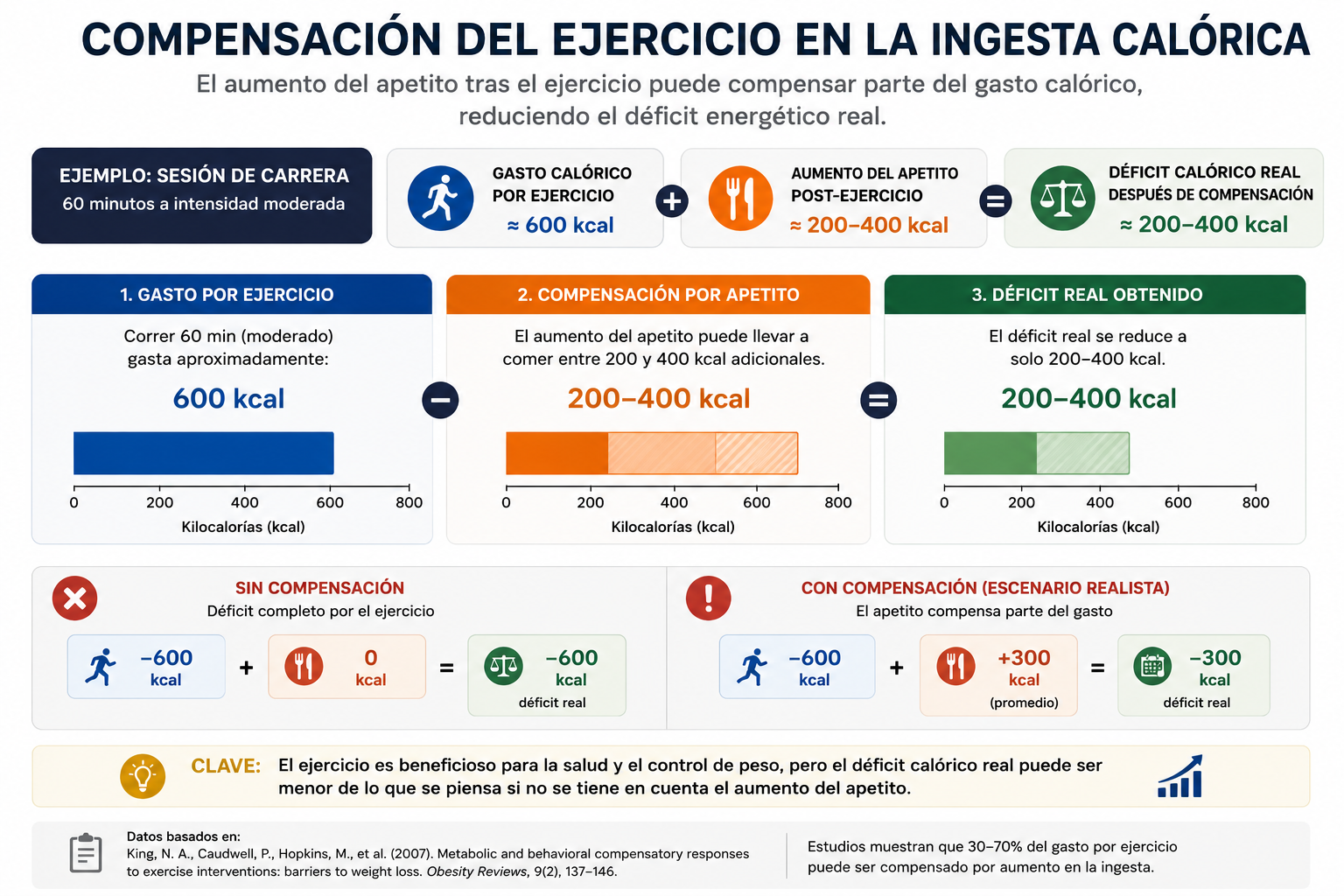
Impact on appetite
Another important difference:
Run:
- May increase hunger in some people
- Generates more physiological stress
- May cause food compensation
Walk:
- Hardly alters appetite
- It is more neutral for hunger
- Does not usually generate compensation
This is important because food compensation can cancel out part of the expense of the exercise.
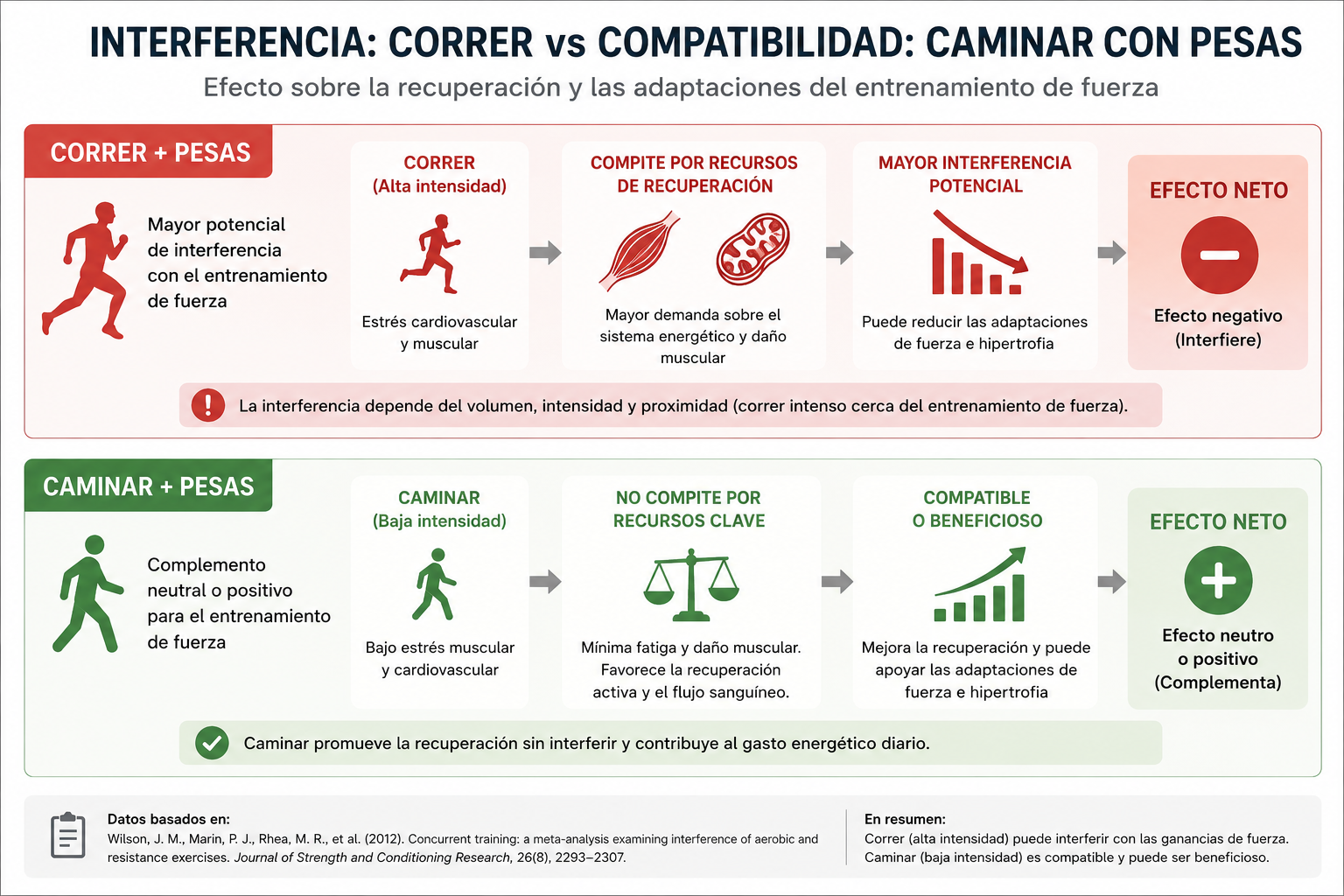
Relationship with strength training
If you do weights:
Run:
- May interfere with leg recovery
- Increases general fatigue
- May affect performance
Walk:
- Does not interfere with force
- May improve recovery
- It is compatible with high volume training
First partial summary
So far, the key idea is:
- Running = more intensity, less sustainability
- Walking = less intensity, more volume possible
And in fat loss, sustainable volume usually wins.
Does running burn more fat than walking?
In the first part we saw the physiological differences between running and walking, how each affects energy expenditure and why sustainability is a key factor. Now it's time to put this into practice: what it really means to lose fat, when each one is appropriate and how to combine them efficiently.
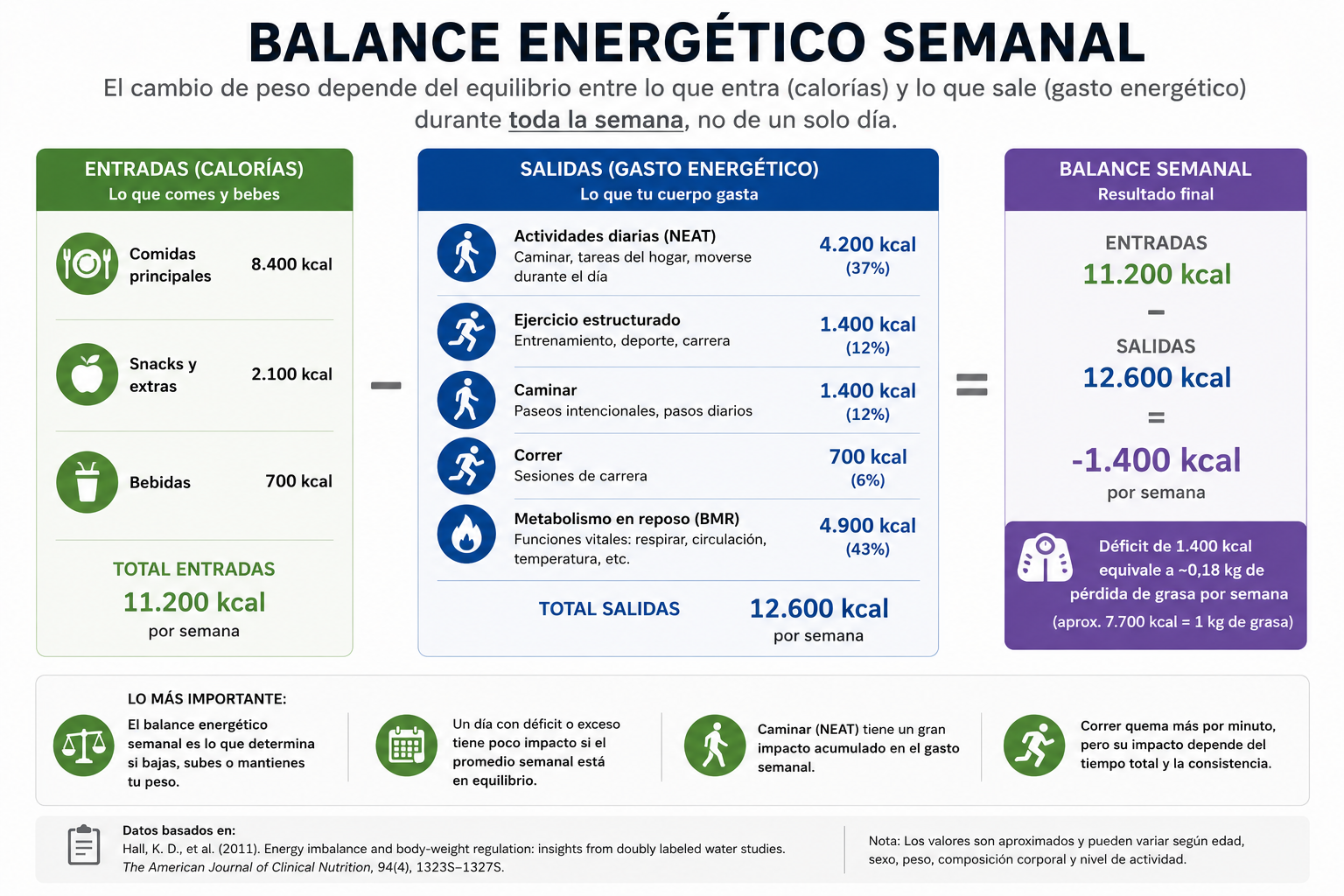
The point that really decides fat loss
Most people focus on exercise, but the dominant factor remains the same:
The total weekly calorie deficit.
That means:
- What you eat
- What you move during the day
- The exercise you do
- Your perseverance for weeks
It doesn't matter if you run or walk if the energy balance is not maintained over time.
Walking: the underrated weapon to lose fat
Walking is probably the most underrated tool in body definition.
Because?
1. Allows high volume without fatigue
You can accumulate:
- 6,000 steps
- 10,000 steps
- 15,000 steps
without feeling like you are “training hard.”
2. Does not interfere with performance
You can walk:
- after training
- On rest days
- Even in aggressive calorie deficit
without compromising recovery.
3. Reduces physiological stress
Unlike intense cardio:
- Does not raise cortisol significantly
- Does not overload the nervous system
- No recovery required
Running: efficient but demanding
Running also has clear advantages:
1. High energy expenditure per minute
In a short time you can generate a considerable expense.
2. Rapid cardiovascular improvement
Increases:
- VO2 max
- Lung capacity
- General resistance
3. It can be useful if you are short on time
If you only have 20–30 minutes, running can be efficient.
The real problem with running to lose fat
The main problem is not running itself, but what usually happens around it:
1. Accumulated fatigue
If you run a lot:
- You get more tired every day
- Lower your spontaneous activity (NEAT)
- You move less without realizing it
2. Food compensation
Many people:
- They run → they are hungrier
- They eat more without noticing it
- They cancel part of the deficit created
3. Less adhesion
Running is not easy for everyone to sustain:
- Impact on joints
- Boredom
- Lack of recovery
Optimal strategy: do not choose, combine
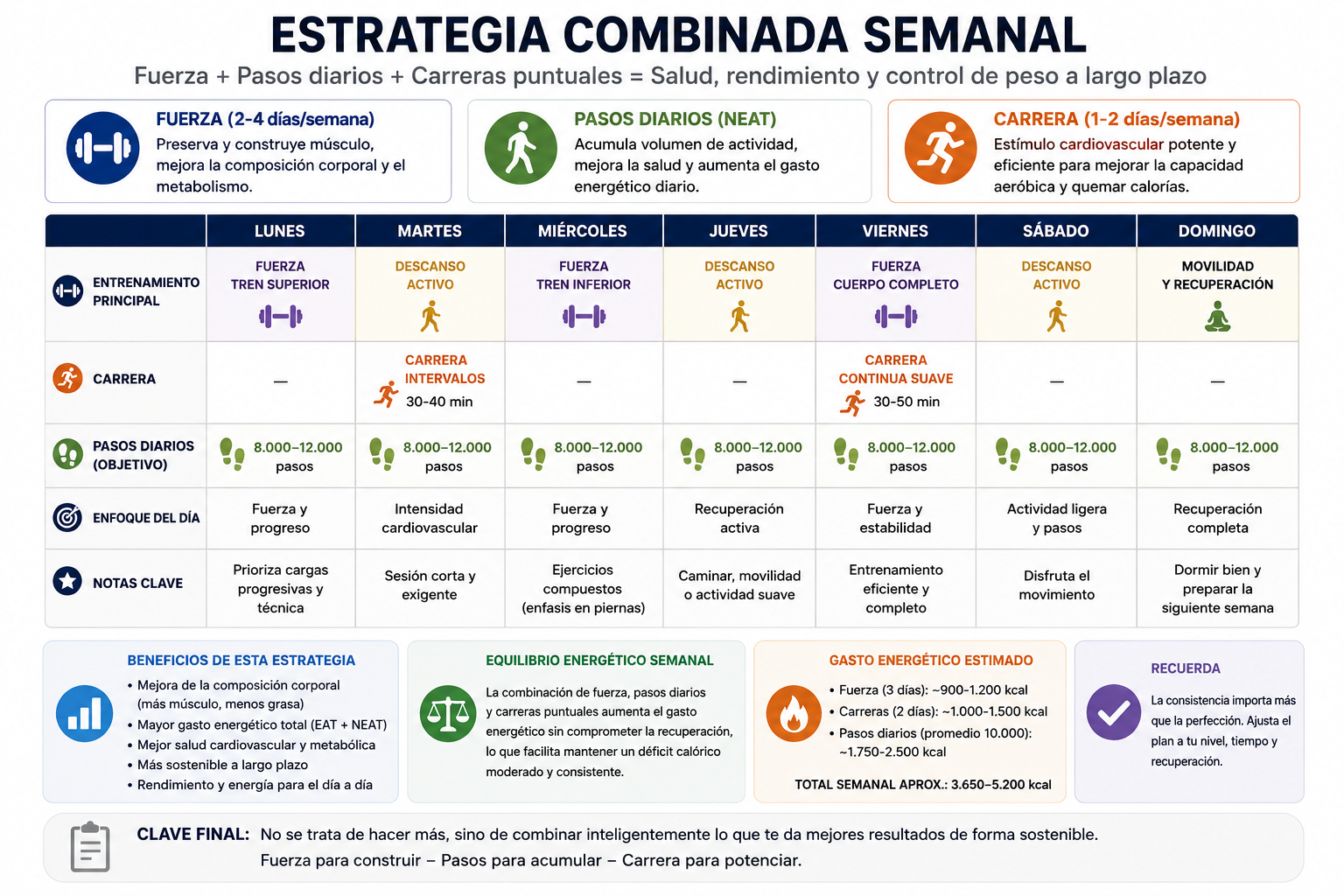
The best strategy is not to run or walk, but to use both intelligently.
System basis:
- Walking = daily basis of energy expenditure
- Running = optional complement to improve cardiovascular capacity
Practical example:
- 8,000–12,000 steps daily
- 2–3 sessions of light or moderate cardio
- Strength training as the main basis
This maximizes:
- energy expenditure
- Recovery
- Adherence
- muscle progress
When is it better to walk
Walking is superior if:
- You are in a caloric deficit
- You train strength
- You have little recovery time
- You are a beginner
- You want long-term consistency
When is it better to run
Running makes more sense if:
- Are you looking to improve cardiovascular performance?
- You have little time available
- You already have a good physical base
- Does not affect your recovery
Common mistake: thinking that more cardio = more fat lost
This is one of the most frequent errors:
- More cardio does not guarantee more fat loss
- The body compensates with hunger and fatigue
- Spontaneous activity is reduced
The end result is often stagnation.
What really works
To lose fat efficiently:
1. Strength
- Maintains muscle
- Improves body composition
2. Daily steps
- Increase spending without fatigue
- Sustainable
3. Strategic cardio
- Complements, does not dominate
4. Diet
- Main factor of the deficit

Conclusion
Running doesn't automatically burn more fat than walking in practical terms. Although it is more intense and consumes more energy per minute, walking allows you to accumulate much more total volume with less fatigue, less interference with training and better adherence.
Real fat loss doesn't depend on choosing the “best cardio,” but on creating a sustainable system where you can maintain a caloric deficit without burning out.
That's why, in practice, walking is usually the most efficient tool for most people, while running works better as a complement or performance tool.
The final result is not decided by the intensity of one day, but by the perseverance of months.