Protein is one of the most important nutrients when the goal is to improve body composition, gain muscle, or lose fat without losing muscle mass. However, it is also one of the most misunderstood. We often hear exaggerated recommendations, such as “the more protein, the better,” or simplifications such as “2 grams per kilo always,” without taking into account the person's real context.
The optimal amount of protein is not a fixed universal number, but a range that depends on your weight, your training level, your fat percentage and your goal (volume, maintenance or definition). Understanding this is key to not eating less or more.
What protein actually does in the body
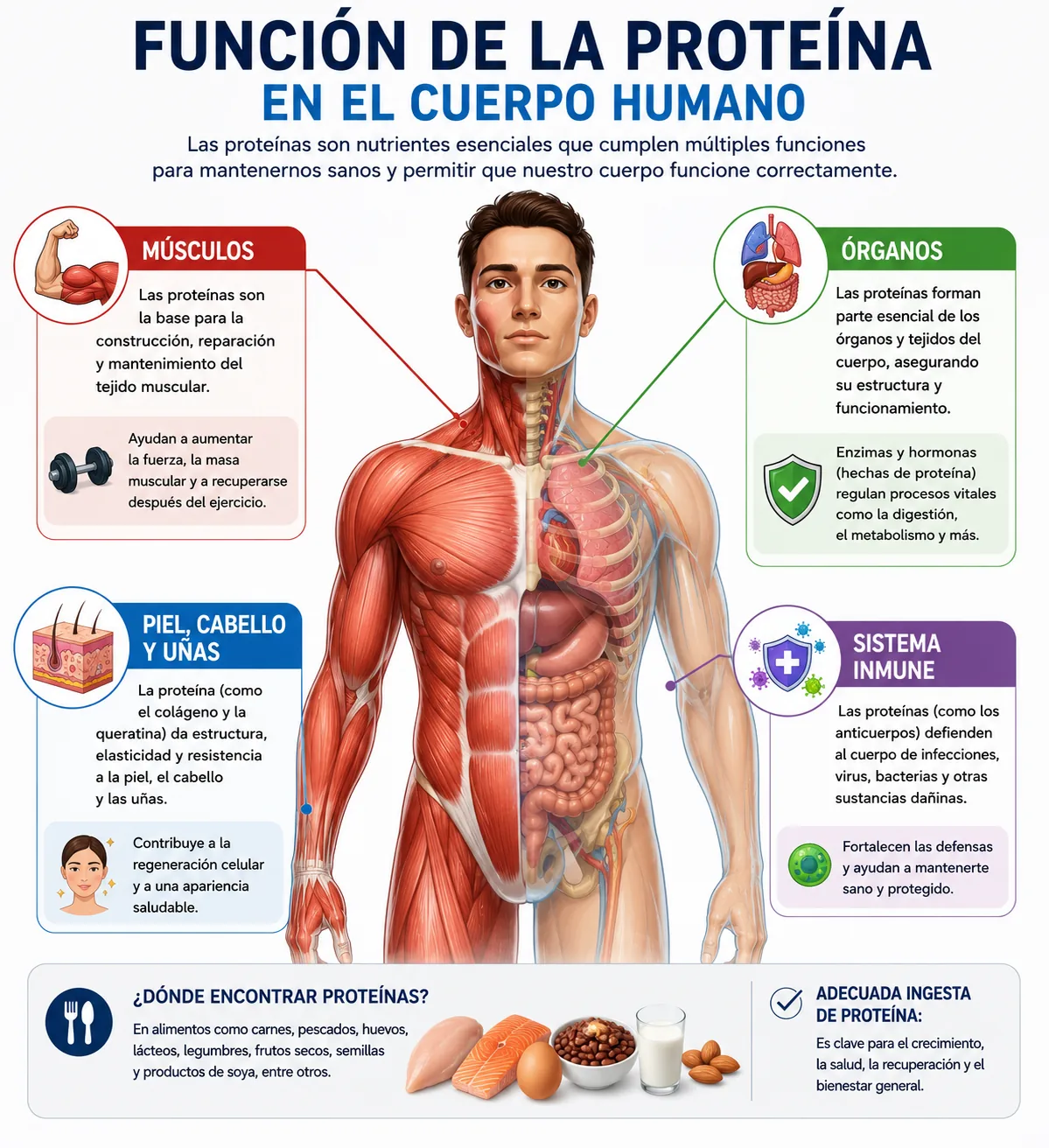
Protein is made up of amino acids, which are the structural blocks of muscle tissue. But its function is not limited to muscle.
In the body, protein serves to:
- Muscle building and repair
- Production of enzymes and hormones
- Tissue maintenance (skin, hair, nails)
- Immune function
- Nutrient transport
When you train strength, you generate muscle microdamage. Protein is the raw material that the body uses to repair and adapt, which produces muscle growth.
The general protein recommendation
For most people, recommendations based on scientific evidence fall within approximate ranges:
- Sedentary: 0.8 g/kg body weight
- Active people: 1.2–1.6 g/kg
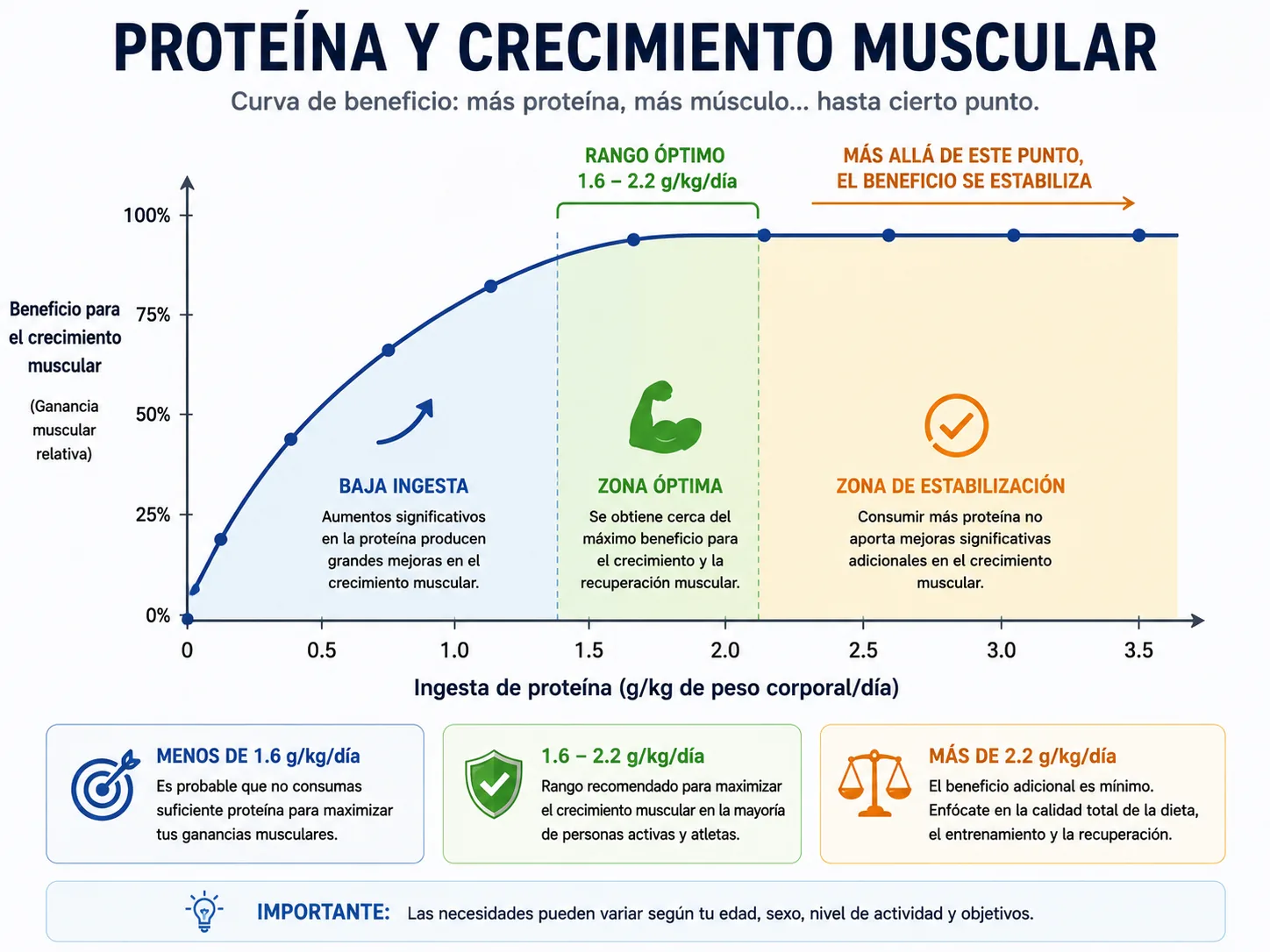
- Strength training: 1.6–2.2 g/kg
This last range is the most relevant if you train in the gym and are looking to improve your physique.
But even within this range there are important nuances.
Why more protein is not always better
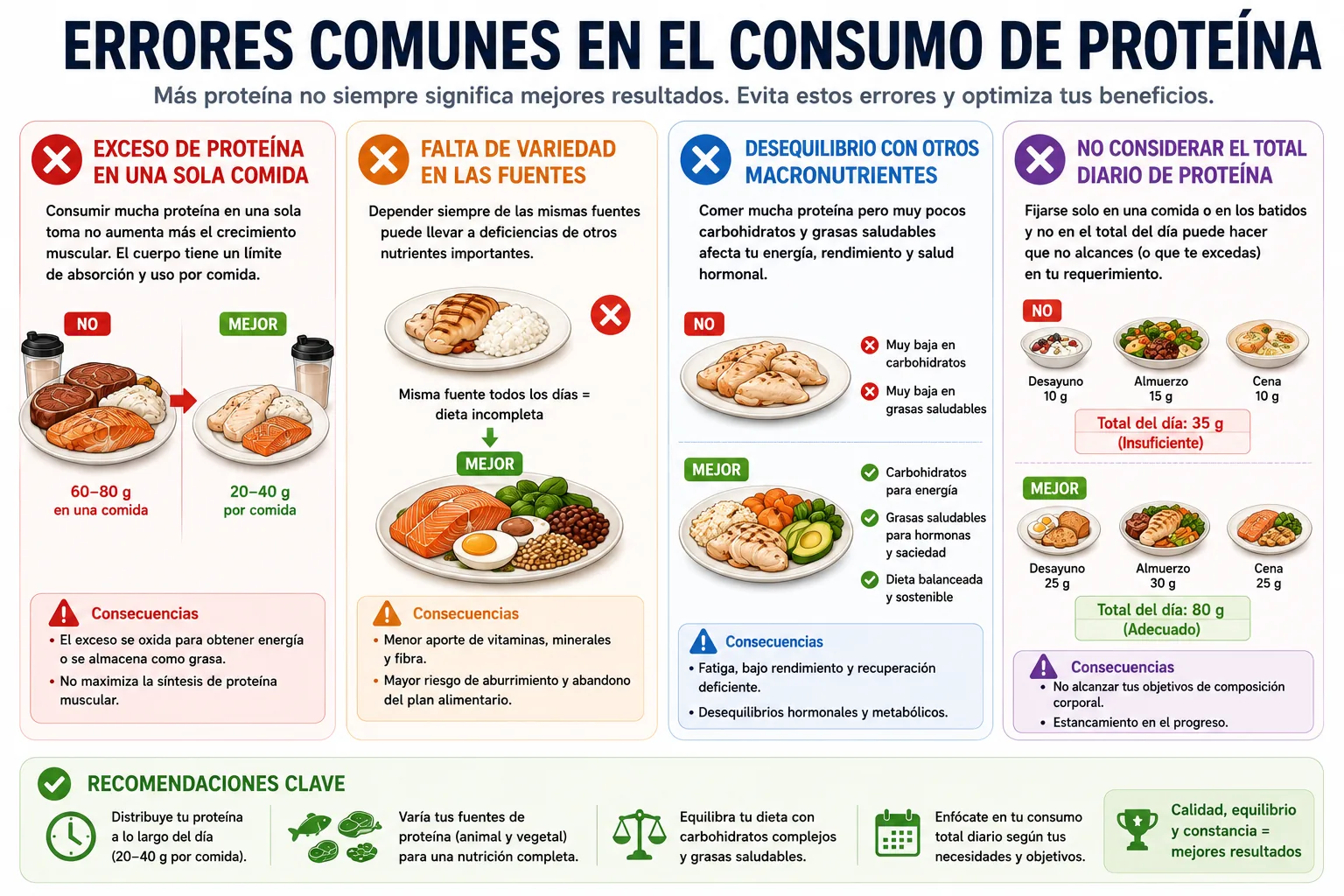
There is an idea that consuming a lot of protein accelerates muscle growth in an unlimited way. This is not true.
The body has a limit of efficiency in daily muscle synthesis. From a certain point:
- Muscle synthesis no longer increases
- The excess is used as energy or disposed of
- No clear additional benefits
Therefore, consuming much more than 2.2 g/kg usually does not provide additional benefits in most cases.
Factors that change your protein needs
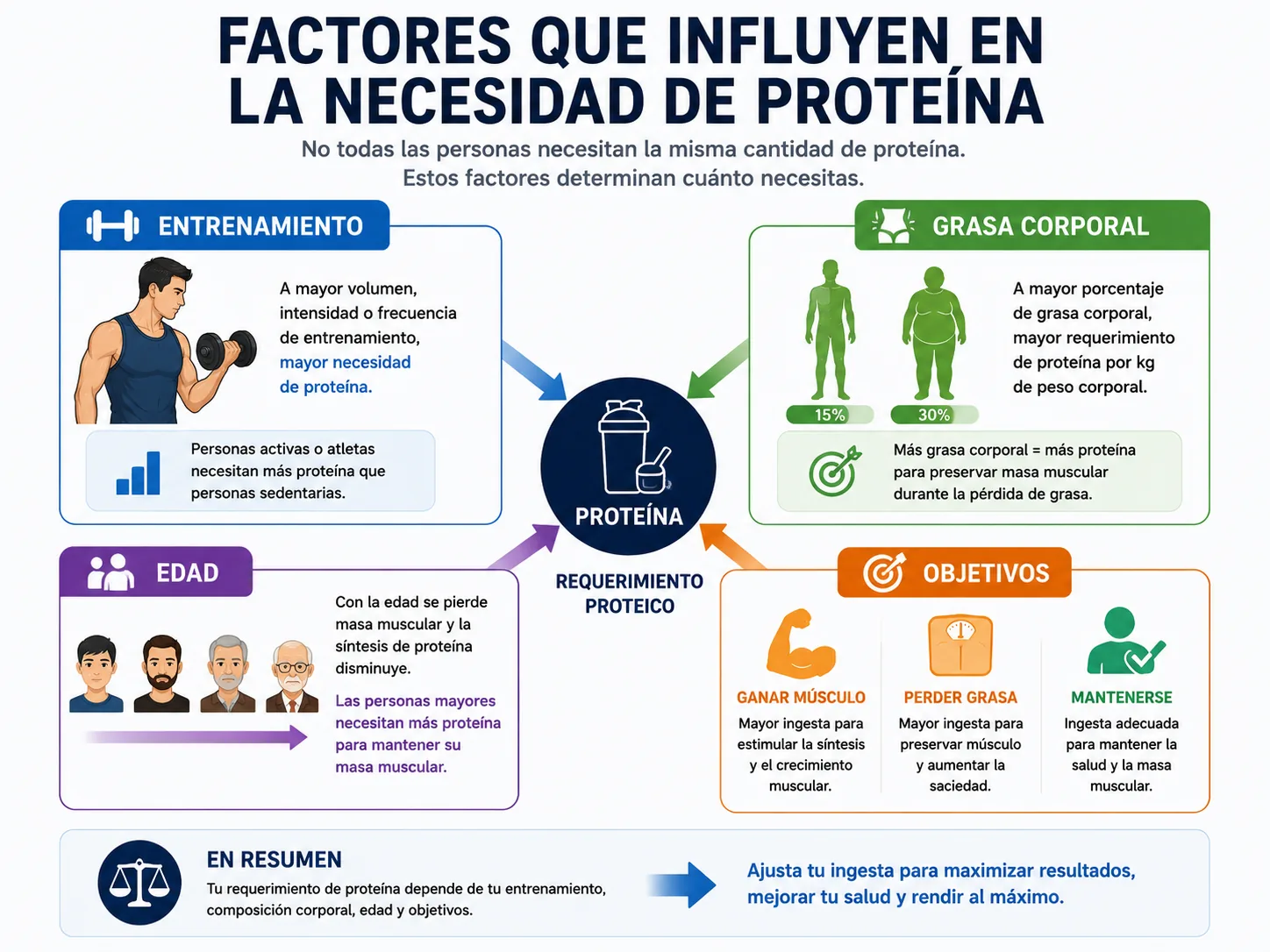
Not everyone needs the same amount. There are important variables:
1. Training level
The more you train strength:
- Greater need for recovery
- Increased protein requirement
2. Fat percentage
People in caloric deficit need more relative protein to protect muscle.
3. Objective
- Volume: enough protein + caloric surplus
- Definition: high protein to maintain muscle
- Maintenance: mid range
4. Age
The older you are, the lower the efficiency of protein synthesis.
Protein distribution during the day
It's not just how much you eat that matters, but how you distribute it.
The body uses protein better when it is divided into several doses.
An optimal distribution would be:
- 3 to 5 meals a day
- 20–40 g of protein per meal (approx.)
- Avoid concentrating everything in a single intake
This improves daily total protein synthesis.
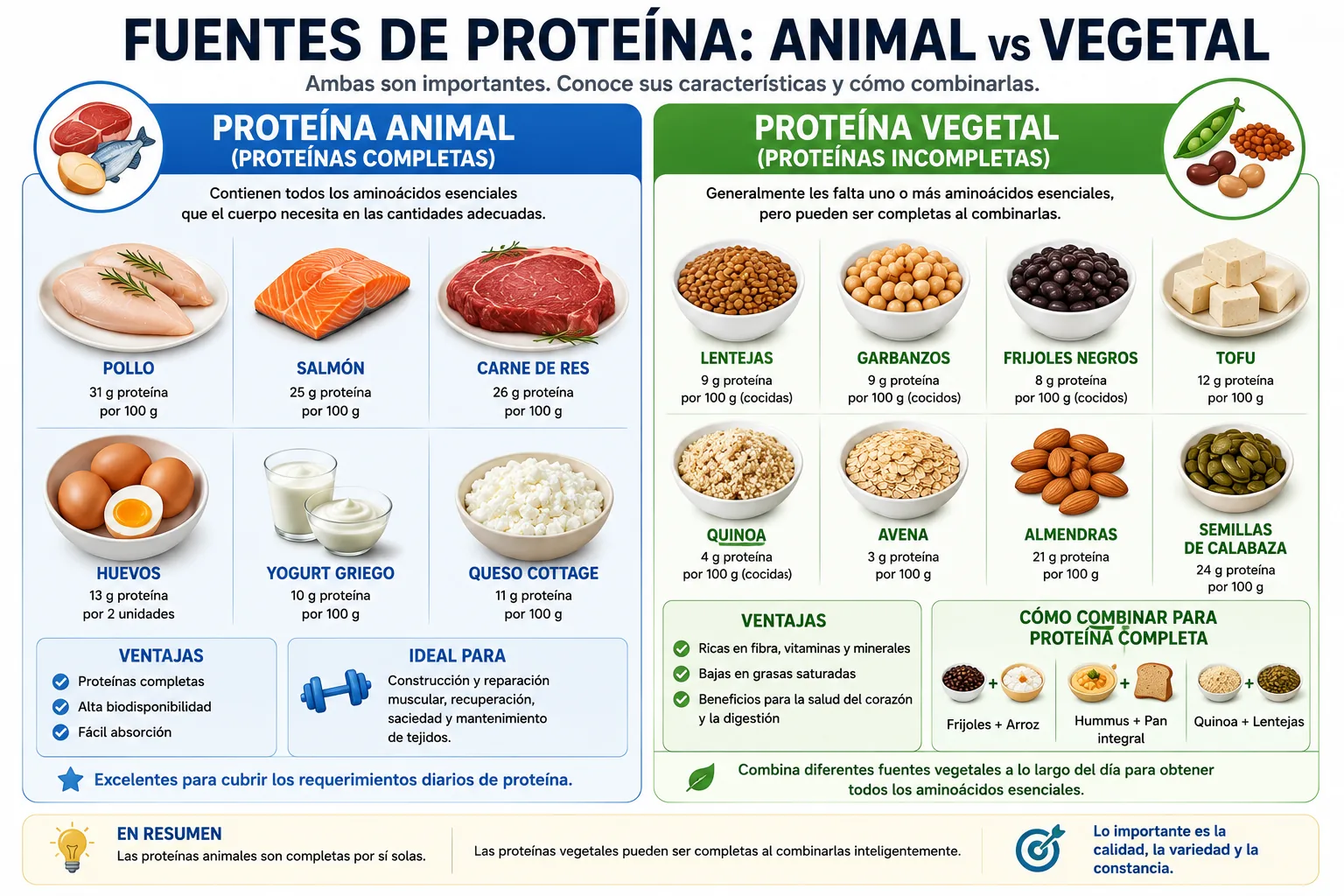
High-quality protein sources
Not all proteins have the same biological quality.
The best sources include:
- Eggs
- Chicken and turkey
- Lean meat
- Fish
- Dairy (yogurt, milk, fresh cheese)
- Whey protein
There are also plant sources, but they usually require combinations for a complete amino acid profile.
Protein in definition vs volume
In volume (gain muscle)
- 1.6–2.0 g/kg is usually sufficient
- Excess calories help growth
In definition (lose fat)
- 1.8–2.4 g/kg is common
- Helps maintain muscle mass
- Increases satiety
In calorie deficit, protein becomes even more important.
Common mistakes with protein
1. Thinking that only protein builds muscle
Without training and enough calories, there is no growth.
2. Eat too much protein and few carbohydrates
It can affect performance in the gym.
3. Do not distribute it during the day
Reduces the efficiency of muscle synthesis.
4. Obsess over the exact number
The range is more important than the exact number.
Conclusion
The amount of protein you need depends on your context, but for most people who strength train, the most efficient range is between 1.6 and 2.2 grams per kilo of body weight.
Less than that can limit progress in certain cases, especially in calorie deficit. More than that, in most situations, does not provide significant additional benefits.
The key is not only the total quantity, but the quality of the sources, the distribution during the day and the combination with proper training and a balanced diet.
Protein is a key tool to improve your physique, but it works within a system: training, recovery and nutrition together.